

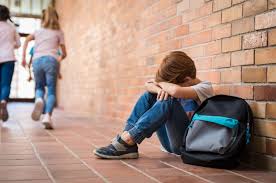
No parent wants to hear that their child fits into any of these categories, and often we are in denial when a kindly or unkindly neighbour or teacher describes our child in any of these terms. Once our children enter the great big world of SCHOOL, we let go of them yet still feel responsible for their experiences and try from afar to help them cope. There are many ways of doing this but Homoeopathy works on all three issues in the most marvelous way.
What can you do?
First is to acknowledge that there may be a problem. Second is to find out as much as you can before reacting. Our first reaction is often to defend our child and hit out at whomever we see as guilty. This can create enormous rifts especially for your child. Their contemporaries often follow them for years, as they are in the same age group and need to deal with the issues themselves, even if you send them to a different school. this should be a last result unless there are serious problems that need to be addressed higher up. So how can you know when this time has come?
All three issues form a social triad, and whether your child is the bullied, the bully or the bystander, they and you, as parent will need to address all three areas. Its often hard to see or acknowledge, but often one role, incites another in the triad.
The bullied:
This is the position that parents most feel the pain of and wish to protect their child. In this, we need to acknowledge our own feelings of pain and also helplessness. We know our child’s vulnerabilities. Children and teens can be bullied at any age and at any time, and in many ways that they wont tell you.
So first is to listen to their own story in an un-judgemental way. If they know you will react, they can either close up, which exacerbates their isolation, or draw you in to attempt to solve their problem for them. Both stances are unproductive and can exacerbate the issue. Second is to talk to your child’s friends in an indirect way with the aim to investigate what is happening. Third is to speak to your child’s teacher. if anything can be done quietly in the classroom eg moving a child, let it be done without fanfare. This does not solve the problem entirely.
The next is to build up and strengthen your child. one way is to affirm their strengths. Dont exaggerate or invent strengths that are not there. After school activities that are non-competitive and of interest to your child help an introverted child to find another social group and confidence in themselves. Be careful not to impose your own definition of what is needed. They do not need to learn self defense or karate in order to become strong. Homoeopathy is a great help here for both the concerned parent and the vulnerable child. A well indicated remedy can help both become stronger and happier. Homoeopathic remedies work subtly but deeply on supporting emotions. This immediately helps with looking more calmly at the situation.
The bully
Most parents are in denial about their child being a bully. Usually, they will be told by a teacher or another parent about the issue only if it is quite marked. Many child bullies and their parents do not see themselves as such, and enjoy the exuberance often at the root of it. A lively strong child is a dream for many parents. What is important here is balance. Parents need to look for where normal exuberance may become bullying or even excluding behaviour that starts to form a “gang”.
So what can you do?
Again the first step is to investigate any issues that come up without reacting. Listen to your child without judging. try to determine why he needs to exhibit bullying behaviour. Is it attention seeking? Is there a new child in the family where your child feels excluded? They often simply need reassurance that they are important and given special alone time with parents. Children often seek out group behaviour when they are excluded from a family group.
Developing a child who shows kindness is as important as having a strong child. So praising giving-behaviour in any way helps to develop these characteristics. Having animals around where your child witnesses kindness and caring and preferably takes responsibility here such as walking the dog. Rewards are important for any efforts to be kind in any way. A thank you is sufficient.
If your child has excessive energy that comes out in negative ways, finding out of school activities that help to expend this energy is key. Peferably find un-competitive activities where they challenge themselves rather than others. This could be hiking, climbing or cycling. Let your child decide on what interests them if possible. this will help them to focus their energy in a different way. Importantly do not suppress the energy.
If the emotional triggers are deeper, a homoeopath has subtle but deeply acting remedies that can help to calm anger, sibling rivalry and general bullying behaviour and also help parents to cope with their frustrations.
The bystander
A bystander who witnesses bullying or participates with the bully by laughing at another’s misfortune should not be ignored. listen to what they have to say because often their reaction is out of fear for being bullied themselves. Often they are scared to get involved but should be encouraged to talk about it. again be careful how you react. parents cannot solve every problem in the world. If there is a serious issue, talk to teachers, friends and other parents but be careful not to gossip. Do not be a bystander yourself but at the same time do not overreact as your child will stop confiding in you.
Empower your child to show compassion even in small and subtle ways like lending a pen to a bullied child. Developing kindness in your child is as important as anything else. Praise any attempt of your child to be inclusive. Moving away from a bullying incident isolates a bully, supports the bullied and should be encouraged without denying the incident. Allow your child to discuss the incident as in many cases they may be carrying it. It is difficult to “tell on” a bully but there are many ways of doing it. if it is serious, you may need to stand in for your child and speak to a teacher. Importantly do not hide it.
In all three cases, homoeopathic emotional support helps to deal with difficult situations. At Gentle path we examine the circumstances thoroughly, advise on actions and provide homoeopathic support.